


Key Takeaways
- CNC machining wheels deliver exceptional precision, strength, and customizable designs, making them ideal for automotive, industrial, and racing applications.
- Advanced CNC processes ensure consistent quality and tight tolerances, directly enhancing safety, durability, and high-performance standards.
- Compared to traditional wheels, CNC-machined wheels offer superior material density, reduced risk of defects, and longer service life, though they may have higher initial costs.
- The versatility of CNC technology supports a wide range of materials and tailored finishes, allowing for unique aesthetics and optimized wheel functionality.
- Selecting the right CNC machining wheels requires attention to compatibility, fit, and regular maintenance to achieve optimal performance and longevity.
CNC machining wheels deliver exceptional precision and customisable designs through computer-controlled manufacturing processes that ensure consistent quality and tight tolerances. These advanced wheels are ideal for automotive, industrial, and racing applications where safety and performance standards are critical. CNC Machining technology enables complex profiles from durable materials like aluminium and steel, supporting applications requiring superior strength-to-weight ratios and reliable performance under demanding conditions.
What Are CNC Machining Wheels?
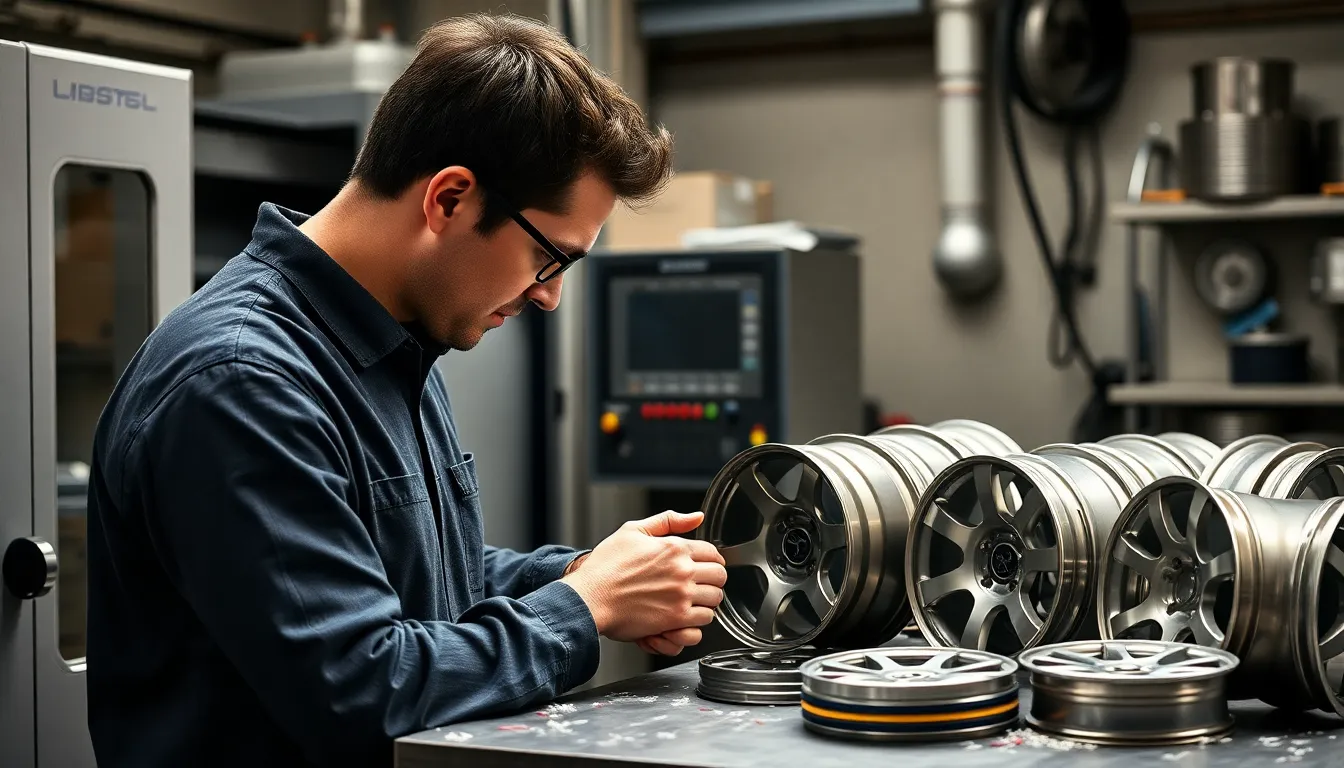
CNC machining wheels feature rims or wheel components produced using Computer Numerical Control (CNC) machining. This automated process removes material from blocks of aluminum, steel, or other metals using precision-controlled cutting tools. Manufacturers create complex profiles and tight tolerances, supporting applications where precision is critical—examples include automotive racing, aerospace landing gear, and industrial conveyor systems.
CNC machining enables consistent designs with repeatability across high production volumes. Each wheel can be customized by adjusting the programming for the design, diameter, offset, or bolt pattern. Yijin Hardware in Homestead, FL produces CNC machined wheels for automotive, aerospace, and medical sectors. The company integrates advanced multi-axis CNC equipment to meet specific strength, weight, and endurance requirements specified by clients.
CNC machining aids in producing smooth finishes without secondary processing. Many companies, including Yijin Hardware, offer surface treatments like anodizing or powder coating alongside precision machining. CNC machining’s accuracy and versatility establish it as a preferred process when users demand uniform quality and unique design options in wheel manufacturing.
Key Features of CNC Machining Wheels
CNC machining wheels combine advanced manufacturing with high-performance engineering for critical automotive, industrial, and racing use. Specialized processes deliver consistent quality, strength, and visual appeal.
Material and Construction
CNC machining wheels use forged or cast blanks made from durable metals—mostly aluminum alloys, such as 6061-T6. Up to 80% of the original material mass is removed during the machining stage, producing lightweight yet strong components. Key stages include turning the barrel and wheel profile on precision lathes, then milling elements like spokes, center bore, and lug holes for structural consistency. This extensive material removal generates high strength-to-weight ratios valued in custom racing and luxury cars. Strict control of raw material sourcing, forging, and post-machining heat treatment ensures enduring integrity.
Precision and Accuracy
Multi-axis CNC machining achieves precision and accuracy with tolerances down to 0.01 mm, enabling tight hub fitment and consistent rim specifications. Computer-controlled tooling monitors all dimensions during production, so every wheel matches design requirements exactly. Leading manufacturers like Yijin Hardware employ real-time quality checks to maintain uniformity across batches. This high precision supports safety, stability, and predictable wheel performance, especially in high-speed applications. Parameters like rim flanges and bead seats align reliably with industry best practices.
Design Versatility
CNC machining enables intricate wheel designs with complex spoke patterns, customized center caps, and diverse finishes including brushed, polished, and painted options. Flexible tooling adapts to a range of metals from soft aluminum to harder titanium, supporting high-end, specialty wheels. Design modifications—such as personalized bolt patterns or unique logo engravings—are standard in advanced shops. Artisans apply specialized finishes after machining, further optimizing both visual appeal and durability for luxury and performance markets. This versatility positions CNC-machined wheels as a premium solution for enthusiasts seeking one-of-a-kind aesthetics and bespoke functionality.
Advantages of CNC Machining Wheels
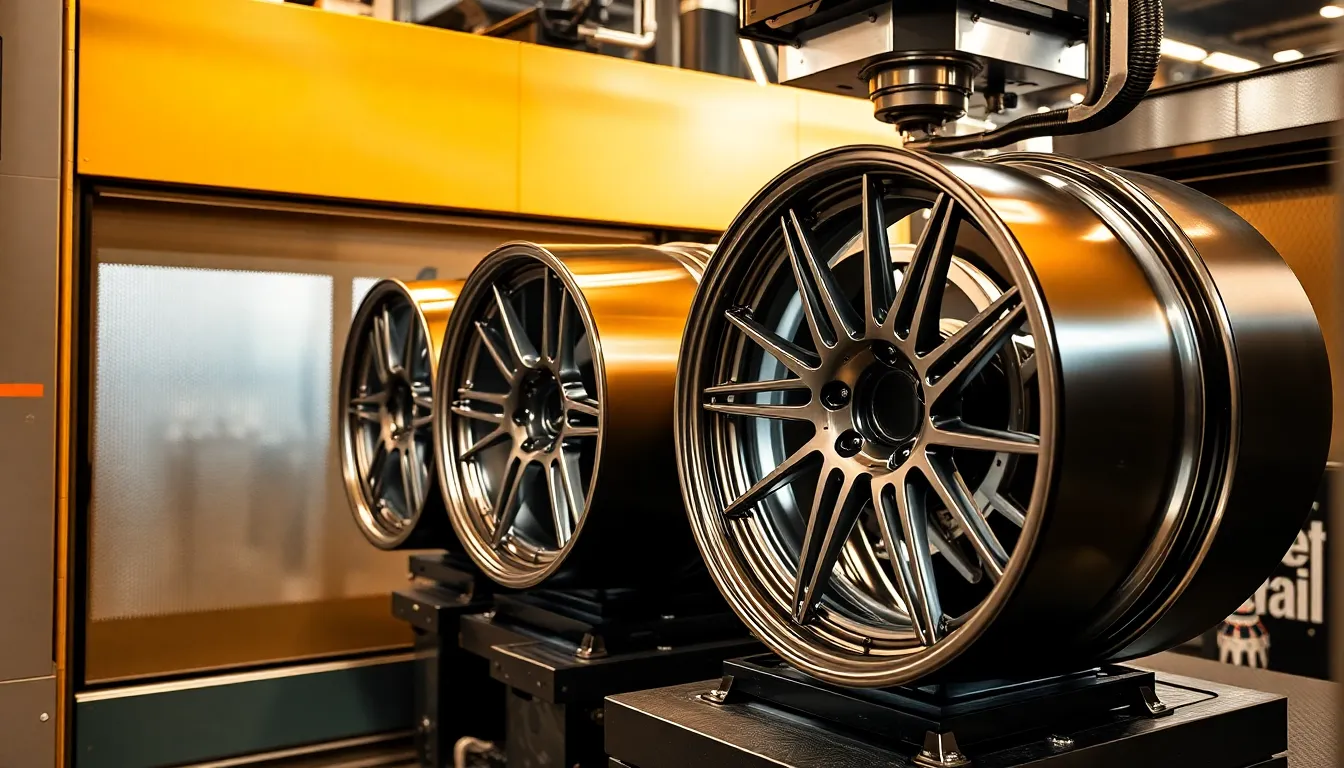
CNC machining wheels offer measurable improvements in precision, customization, and efficiency for automotive and industrial applications. The technology enables exact replication and advanced design capability using computer-guided controls.
Performance Enhancement
CNC-machined wheels deliver precise fit and balance essential for optimized vehicle handling and stability. Tight tolerances down to 0.01 mm ensure consistent rim geometry, reducing vibration and supporting high-speed safety standards (see sources [1][3][4]). Manufacturers like Yijin Hardware use multi-axis equipment to cut durable alloys, resulting in wheels with increased structural integrity. Improved balance limits wear on tires and suspension. Fast production cycles—enabled by automated tool changes and laser measurement, which scan wheels in as little as 15 seconds—reduce downtime for repairs and production (sources [1][3]).
Customization Options
CNC machining supports advanced customization using digital design files. Complex designs, including intricate spoke patterns and unique surface textures, become feasible through programmed tool paths. This approach allows wheel manufacturers to meet both visual and performance specifications tailored to exact customer needs. Yijin Hardware, for example, uses state-of-the-art software to deliver custom configurations, including specific diameters and bolt patterns, across automotive and specialty applications. CNC compatibility with metals and composites enhances flexibility in design and optimization for weight or strength (sources [1][2][4]). Uniform quality is maintained across mass or single-piece production, supporting both specialist and high-volume requirements.
Comparing CNC Machining Wheels to Traditional Wheels
CNC machining wheels use automated, computer-controlled processes to achieve high accuracy and consistent quality. Traditional wheels use manual machining, making their quality dependent on operator expertise.
Strength and Durability
CNC machining wheels show high precision and uniformity backed by automated control. This process results in consistent material density, directly improving wheel strength and lifespan. CNC methods remove material with exact tolerances, minimizing weak points seen in traditional wheels shaped by manual machinists. Optimized CNC geometries, common in automotive and racing applications, improve resistance to fatigue and stress fractures. Traditional machining creates durable wheels in small runs, but operator skill affects consistency, often leading to minor structural variations and shorter fatigue life under demanding use.
Cost Considerations
CNC machining wheels carry higher upfront costs due to investment in automation, programming, and specialized tooling. Large production volumes lower per-unit cost through reduced labor and waste. Faster cycle times support efficient scale-up and uniform output. Traditional machining’s lower initial capital benefits one-off or custom projects but incurs higher ongoing labor costs. Manual intervention slows production and increases per-part expenses in batch manufacturing. For complex designs or high volumes, CNC automation offers significant long-term savings compared to manual methods, especially where output consistency and minimized waste are priorities.
Popular Applications of CNC Machining Wheels
CNC machining wheels provide unmatched precision and personalization for demanding sectors. Tight tolerances, fast prototyping, and repeatable results support both high-volume and specialized use cases.
Automotive Industry
CNC machining advances the automotive industry through high-precision parts. Manufacturers use this technology to produce cylinder heads and engine blocks from aluminum, securing precise combustion chamber geometry for efficient power delivery. Gearboxes and transmission shafts come from CNC systems, increasing part longevity and smooth operation. Components including drive axles, hypoid gears, and bevel gears depend on CNC processes for correct tolerances, giving consistent wheel movement and safe handling. Suspension system parts manufactured with computer-guided controls boost safety and ride quality. CNC machining enables large output volumes with strict quality control; it also allows design flexibility for custom, prototype, and niche automotive wheels. Yijin Hardware in Homestead, FL uses advanced multi-axis CNC equipment for automotive requirements, supporting both OEM production and custom wheel projects.
Motorsport and Racing
CNC machining drives innovation in motorsport and racing. Racing teams specify lightweight, custom wheels to reduce rotational mass, enhancing acceleration and handling. CNC systems provide rapid turnaround for components such as complex engine parts, transmission housings, and structural elements required to withstand high heat, force, and demanding race conditions. Consistency in manufacturing yields parts with tolerances as tight as 0.01 mm, crucial in fast-paced environments where reliability decides race outcomes. Customization options, like tailored spoke designs or unique rim profiles, improve both aesthetics and aerodynamics. Yijin Hardware supplies CNC-machined racing wheels and precision parts for motorsport teams seeking fast deliveries and tight tolerances, supporting efforts to achieve peak performance and durability in competition settings.
Things to Consider Before Buying CNC Machining Wheels
Selecting CNC machining wheels for grinding or milling demands careful consideration of machine requirements and operational needs. Material compatibility, fitment, and ongoing maintenance directly affect efficiency, wheel life, and product quality.
Compatibility and Fitment
CNC machining wheels must match the machine’s technical specifications to ensure effective performance. Key parameters include wheel diameter, thickness, shape, and type, which must align with device requirements and the intended process. Material and grit size must correspond to the workpiece—vitrified wheels suit applications needing high precision on steel, while diamond wheels cut ultra-hard materials such as carbide or ceramics. Insufficient fit or material mismatches reduce productivity and compromise finishes in applications for automotive, aerospace, or industrial parts. Manufacturers like Yijin Hardware rely on strict wheel selection protocols to achieve quality outcomes for complex aerospace and automotive components.
Maintenance Requirements
Regular maintenance directly extends the performance and life of CNC machining wheels. Maintenance routines should track wheel wear, assess machine calibration, and record usage cycles to schedule timely replacements. Keeping spare wheels and critical parts on hand ensures production continuity in case of wear or damage. Proper recordkeeping, including wheel change and usage logs, helps define optimal servicing intervals, reduces unscheduled downtime, and maintains consistent quality. Yijin Hardware implements structured maintenance and inventory protocols in Homestead, FL to support precision across CNC manufacturing processes for clients in automotive, medical, and aerospace sectors.
About Yijin Hardware
Yijin Hardware, located in Homestead, FL, is a leading provider of precision manufacturing services, specialising in CNC machining, sheet metal fabrication, and custom fasteners.
Under the leadership of CEO Gavin Yi, Yijin Hardware also offers additional solutions such as die casting, injection molding, and 3D printing to support various industries, including automotive, aerospace, medical, and energy. With a commitment to high-quality manufacturing and precision engineering, Yijin Hardware delivers tailored solutions to meet the unique needs of its clients.
Contact:
Gavin Yi, CEO
Phone: +1 626 263 5841
Email: [email protected]
Website: www.yijinsolution.com
Follow us:
Location:
760 NW 10th Ave, Homestead, FL 33030
Frequently Asked Questions
What are CNC machining wheels?
CNC machining wheels are high-precision wheels produced using Computer Numerical Control (CNC) technology, which automates the manufacturing process for consistent quality and customized designs, mainly using metals like aluminum and steel.
Why are CNC-machined wheels popular in the automotive industry?
CNC-machined wheels are favored in the automotive industry for their precision, strength, and the ability to create custom designs, which results in better performance, safety, and aesthetic appeal for both regular and high-performance vehicles.
How do CNC machining wheels differ from traditional wheels?
CNC machining wheels are made using automated, computer-controlled processes for high accuracy and uniformity, while traditional wheels are manually machined, resulting in more variable quality and less design complexity.
What materials are commonly used for CNC machining wheels?
The most common materials for CNC machining wheels are durable metals like aluminum alloys (especially 6061-T6) and steel, which offer a balance of strength, lightweight characteristics, and corrosion resistance.
Can CNC machining wheels be customized?
Yes. CNC machining allows for extensive customization, including personalized sizes, bolt patterns, spoke designs, and a variety of finishes, ensuring wheels meet specific requirements and preferences.
What are the primary benefits of CNC-machined wheels?
Key benefits include exceptional precision, consistent quality, advanced customization, improved strength, and fast production cycles, making them a top choice for performance applications.
Are CNC wheels more durable than traditional wheels?
Yes. CNC wheels feature optimized geometries and consistent material density, which enhance their strength and resistance to fatigue, making them generally more durable than traditional wheels.
Is CNC machining cost-effective for wheel production?
CNC machining has higher upfront costs but offers long-term savings through reduced labor and material waste, especially for larger production volumes. It’s less cost-effective for very small batches.
What applications are CNC machining wheels used for?
CNC-machined wheels are commonly used in automotive, motorsport, industrial, aerospace, and medical sectors, where precision, reliability, and customization are crucial.
How should CNC-machined wheels be maintained?
Regular maintenance such as inspecting for wear, cleaning, and timely replacement ensures optimal performance and extends the lifespan of CNC-machined wheels. Structured maintenance routines are highly recommended.